
AI search is getting good at answering questions without clicks. That only works when systems can trust who said what. If you want your expertise to surface in AI answers and knowledge panels, you need clear, consistent signals about your identity and work.
This guide shows how Wikipedia, Wikidata, and Google’s Knowledge Graph fit together, and what you can do to strengthen your author or brand profile across them. You will not game the system here; you will align your facts, sources, and signals so machines and humans both find you credible.

Contents
- TL;DR
- Why Author Authority Matters in AI Search
- How Wikipedia, Wikidata, and Knowledge Graph Work Together
- Digital Authority Platforms: A Side-by-Side View
- Wikipedia: What Helps and What Hurts
- Wikidata: Your Structured Backbone
- Knowledge Graph: Turning Signals Into Panels
- Implement the Technical Pieces Correctly
- Examples
- Actionable Steps / Checklist
- Glossary
- FAQ
- Final Thoughts
TL;DR
- AI search relies on structured facts about entities; make your entity easy to identify and verify across the web.
- Use Organization/Person structured data with sameAs links and a robust About page to anchor your identity.
- Treat Wikipedia as a summary of independent coverage; Wikidata as the structured backbone that machines read.
- Claim and maintain any knowledge panel you qualify for, then keep feeding consistent evidence across sources.
Why Author Authority Matters in AI Search
When people ask AI systems for advice or quick facts, those systems blend text understanding with entity understanding. An entity is a person, organization, place, or work. Google’s Knowledge Graph ties entities to facts and sources so answers can be grounded, not guessed.
Google’s guidance stresses helpful, reliable, people‑first content and highlights E‑E‑A‑T (experience, expertise, authoritativeness, trust) as a lens for quality. That lens works best when your identity and signals are unambiguous. If search engines cannot disambiguate you from others with the same name, your authority will not transfer into AI answers.
How Wikipedia, Wikidata, and Knowledge Graph Work Together
Think of these layers as complementary, not competing:
- Wikipedia is a human‑readable summary with citations to independent sources. It reflects coverage you have already earned and is maintained by volunteers.
- Wikidata is the structured database that stores facts as statements with properties and sources. It powers many infoboxes and is widely consumed by machines, not just Wikimedia projects.
- Google’s Knowledge Graph is Google’s entity database that aggregates facts from the web, open sources like Wikipedia and Wikidata, and licensed data, then renders knowledge panels when confidence is high. Google has said publicly that it gathers data from materials across the web, open databases, and licensed providers.
Digital Authority Platforms: A Side-by-Side View
This side-by-side comparison of three critical layers can help you build entity authority. See how their differences can let you focus your efforts where they will have the most impact on Google’s understanding of their identity and expertise.
| Layer | Purpose | Inclusion Test | Data Format | Who Controls It | Common Pitfalls |
| Wikipedia | Human‑readable summary with citations | Notability shown by significant, independent coverage | Articles with references | Community volunteers | Self‑promotion; thin sourcing; conflicts of interest |
| Wikidata | Machine‑readable facts and IDs | Item is connected to Wikimedia or has verifiable identifiers | Statements, properties, external IDs | Community volunteers; bot imports | Unsourced statements; missing external IDs; duplicate items |
| Google Knowledge Graph | Entity understanding for search and panels | Confidence from multiple trusted signals | Entities are exposed in JSON-LD format via the Knowledge Graph Search API (limited public access). | Inconsistent naming; weak or missing sameAs; unverified panels |
Wikipedia: What Helps and What Hurts
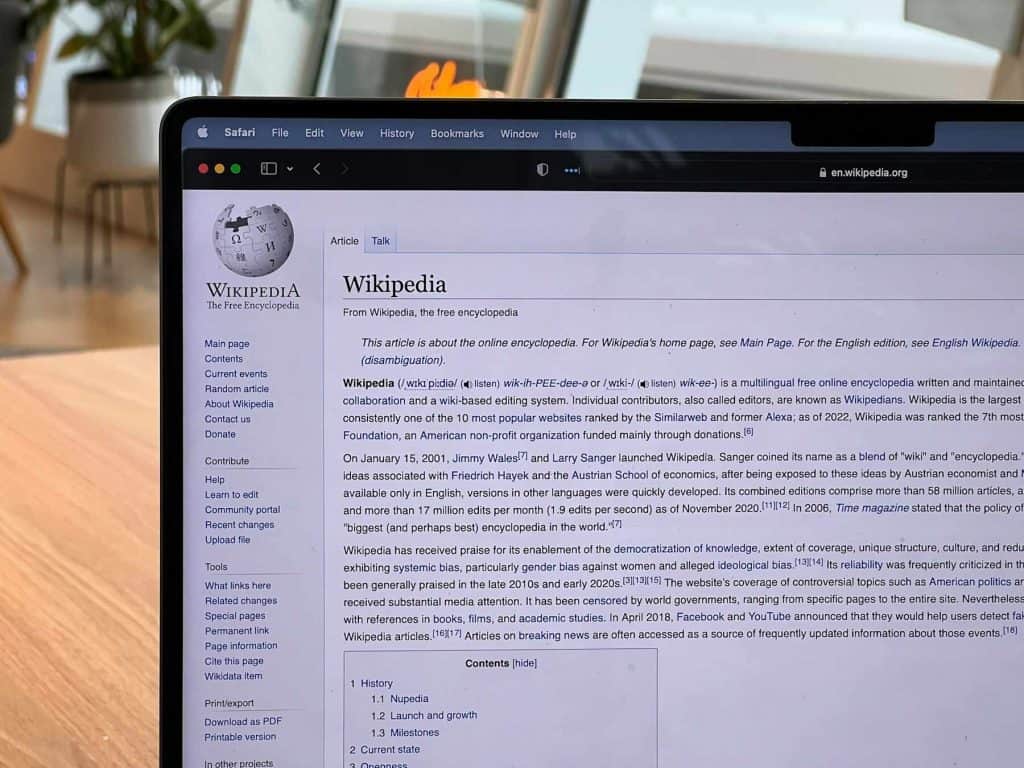
Wikipedia is not a place to declare your expertise; it summarizes independent, reliable coverage about you. The English‑language community’s notability guidance looks for significant attention over time, evidenced by coverage in independent secondary sources. Articles with weak sourcing are tagged or trimmed.
If you are not yet notable by those standards, focus on earning coverage first and avoid writing an article about yourself. You can still correct factual errors through article talk pages or edit requests if you have a conflict. Start with these tips:
- Build a footprint in respected publications, conferences, and books.
- If an article exists, improve verifiability by adding citations to independent sources and removing self‑references.
- Avoid marketing language. Wikipedia’s culture rewards neutrality and high‑quality sources.
Wikidata: Your Structured Backbone
Wikidata stores facts like occupation, employer, official website, social handles, and external identifiers (for example, ORCID, VIAF). Items are multilingual, and one update can flow into many Wikipedias. The notability policy allows items that link to a Wikimedia page or use recognized external identifiers, with community review for edge cases.
Add only verifiable statements and cite sources when facts are disputed or not obvious. What to prioritize in your item:
- Labels and descriptions in the languages your audience searches.
- External IDs that match your field (ORCID for researchers, MusicBrainz for artists, etc.).
- Official website, social profiles, and works tied to the correct properties.
- Sourcing for key claims like roles, awards, and publications.
Knowledge Graph: Turning Signals Into Panels
Google builds knowledge panels automatically when it is confident about an entity and its attributes. It draws from Wikipedia and Wikidata, licensed datasets, structured data on your site, and authoritative profiles. If a panel exists and is claimable, get verified.
That lets you suggest factual fixes and reinforce official links. Keep expectations realistic; verification allows you to suggest edits, not force them. Key signals you control on your site:
- A strong About page that clearly names the entity and lists official profiles.
- JSON‑LD Organization or Person markup with sameAs links to those profiles.
- Consistent name, logo, or headshot, and description across your web presence.
Implement the Technical Pieces Correctly
These technical implementation steps help search engines understand and validate your identity and credibility, and may improve eligibility for inclusion in the Knowledge Graph. However, structured data alone does not guarantee a knowledge panel.
- Use JSON‑LD structured data: Google supports JSON‑LD, Microdata, and RDFa, but recommends JSON‑LD for ease and reliability.
- Add Person or Organization markup on your About page: Include name, description, URL, logo or image, and robust sameAs links to official profiles and high‑authority listings. Validate with Google’s Rich Results Test.
- Keep site‑wide consistency: Names, bylines, and contact details should match your structured data and public profiles.
Examples
Take a look at how these case studies implemented structured data and linking verifiable external profiles to gradually earn a Knowledge Panel and enhanced authority recognition from Google.
Independent Researcher
A climate scientist without a Wikipedia page publishes peer‑reviewed papers, contributes to an authoritative government report, and speaks at a major university. They add an ORCID, link it on their site, and create a Wikidata item with sourced statements for employer, field, ORCID, and key works. Their site’s About page uses Person markup with sameAs to ORCID, Google Scholar, and the lab profile.
Over months, Google starts showing a small knowledge panel for the researcher’s name, seeded by those consistent, verifiable signals. Results vary by coverage and time, but the structured backbone accelerates understanding.
Startup Founder
A founder seeks a Wikipedia page but lacks independent coverage. Instead, she focuses on solid press in reputable outlets, gets listed in Crunchbase as a consequence of that coverage, speaks at two conferences with published programs, and updates her site’s Organization markup with sameAs to official profiles.
She creates a Wikidata item for the company with external IDs and sources. A knowledge panel appears for the company first; later, the founder gains a panel after sustained coverage. No COI edits were needed because the evidence came from third‑party sources Google already trusts.
Actionable Steps / Checklist
Here is a prioritized checklist of steps to systematically build digital authority across various platforms.
- Clarify your canonical identity: Standardize your name, headshot/logo, and one‑sentence description everywhere.
- Fix your About Page: Publish a comprehensive About page with official profiles and contact info.
- Add structured Data: Implement JSON‑LD Person or Organization markup. Include sameAs links to authoritative profiles. Validate and monitor.
- Build or improve your Wikidata item: Add labels, descriptions, official website, social links, occupation/industry, and external identifiers. Cite sources for non‑obvious claims.
- Earn citable coverage: Prioritize interviews, journal papers, reputable media, conference programs, and government or university pages that profile you.
- Respect Wikipedia norms: Avoid writing your own Wikipedia article. Autobiographical editing is strongly discouraged. Instead, use talk-page edit requests unless you are correcting clear factual errors or policy violations.
- Claim your Knowledge Panel (if available): Search your name or brand, click the claim prompt, and complete verification. Suggest factual edits sparingly and support them with strong sources.
- Maintain consistency over time: Keep facts in sync across your site, profiles, Wikidata, and press pages. Revalidate structured data after site changes.

Glossary
Go over these key technical and conceptual terms and their relevance to authority building in AI search.
- Entity: A real‑world thing such as a person, organization, or place that a knowledge graph can identify.
- Knowledge Graph: A database of entities and their relationships that helps search engines understand facts.
- Knowledge Panel: The information box about an entity that can appear in Google’s results.
- Structured Data: Machine‑readable markup (often JSON‑LD) that explains page content to search engines.
- sameAs: A schema.org property that links your page to official profiles elsewhere to confirm identity.
- Wikidata Item: A record in Wikidata that stores facts, properties, and external identifiers about an entity.
- Notability: Wikipedia’s standard that a topic has significant, independent coverage in reliable sources.
- E‑E‑A‑T: Experience, Expertise, Authoritativeness, and Trustworthiness; Google’s quality lens for helpful content.
FAQ
Do I need a Wikipedia page to get a knowledge panel?
While a Wikipedia page helps to get a knowledge panel, Google says it draws from many sources, including open data, licensed databases, and structured data on your site.
Do I need a Wikipedia page to get a knowledge panel?
While a Wikipedia page helps to get a knowledge panel, Google says it draws from many sources, including open data, licensed databases, and structured data on your site.
What if my knowledge panel is wrong?
If the knowledge panel is claimable, verify and suggest factual changes. Also, fix inconsistencies on your site, Wikidata, and official profiles so Google sees matching evidence.
Should I create my own Wikipedia article?
There’s no need to create your own Wikipedia article. Wikipedia summarizes independent coverage and discourages self‑promotion. Focus on earning reliable coverage first and use talk‑page requests for corrections.
How long does structured data take to help?
There is no fixed timeline as to when structured data can help. After publishing valid markup and improving external signals, allow days to weeks for crawling and reprocessing.
Is JSON‑LD required?
JSON‑LD isn’t required, although it’s recommended by Google because it is easier to implement and maintain accurately.
Final Thoughts
Author authority in AI search is not a hack. It is the byproduct of consistent facts, credible third‑party coverage, and clean technical signals. Treat Wikipedia as a mirror of earned reputation, Wikidata as your machine‑readable spine, and your site’s structured data as the bridge that ties it all together. Do the unglamorous work once, maintain it quarterly, and let the signals compound.

